Decision Lab — From Static Maps to a Living System of Accountability
Role: Lead Product Designer
Company: McKinsey & Company
Focus: Strategy, Research Synthesis, Experience Design, and Design Direction
The Challenge
Despite their rigor, process-mapping sessions were failing to drive lasting change.
Through research with consultants and executives, we uncovered four consistent pain points:
Complexity: Existing maps were visually dense and inaccessible to C-suite leaders.
Fragility: Once workshops ended, the documentation vanished — no version control, no living record.
Inefficiency: Pain points like long durations, redundant handoffs, and unclear ownership created bottlenecks.
Lack of Accountability: Multiple roles often shared ownership for the same step, creating confusion and blame cycles.
The opportunity was clear:
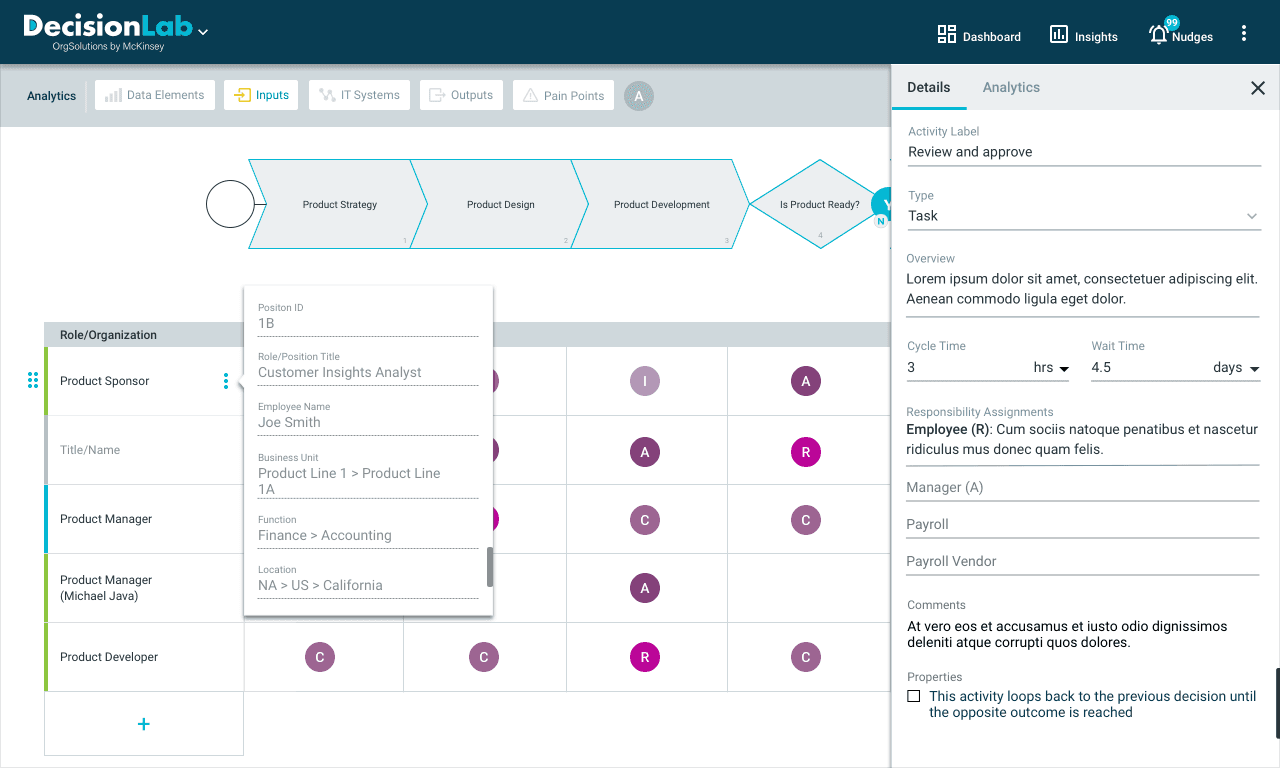
Design a living system that simplified process mapping, enforced accountability, and revealed inefficiencies — all while integrating seamlessly with OrgLab, McKinsey’s organizational intelligence suite.
“Every time we reorganize, we start from scratch. There’s no record of decisions or accountability.”
-Senior Analyst
The Vision
What started as a business process mapping tool quickly grew into something far more powerful — a decision intelligence system.
By combining role-based ownership, diagnostic analytics, and smart nudges, Decision Lab transformed process documentation into a data-driven artifact that guided teams toward best practices in real time.
Research & Discovery
I began by interviewing consultants, executives and clients across industries to understand how process decisions were captured and communicated.
Key insights emerged:
Consultants needed speed and flexibility — mapping sessions often occurred live, with clients in the room.
Executives wanted clarity, not detail — they needed quick reads on accountability and bottlenecks.
Analysts wanted quantifiable insights — something measurable to justify changes to clients.
To validate direction, I ran a competitor analysis of process mapping and workflow tools.
Most tools visualized steps but failed to tie them to accountability or performance metrics — a crucial gap we could fill.
These findings shaped three guiding principles:
Clarity over complexity
Accountability over activity
Adaptability over rigidity
Strategy & Product Definition
We defined the MVP as a tool that could:
Capture roles, responsibilities, and pain points directly within process maps
Provide smart nudges aligned with organizational best practices
Offer diagnostic dashboards to surface inefficiencies across multiple processes
Integrate seamlessly with OrgLab for unified data governance
From there, I established the design principles and experience architecture to ensure flexibility for consultants while maintaining executive-level clarity.
“For the first time, I can clearly see who is accountable for each step of the process. That clarity not only speeds up decision-making, it makes the entire process more efficient.”
-CEO
Design & Evolution
Each week brought new pivots as we co-created with users.
Here’s how the solution evolved through iteration:
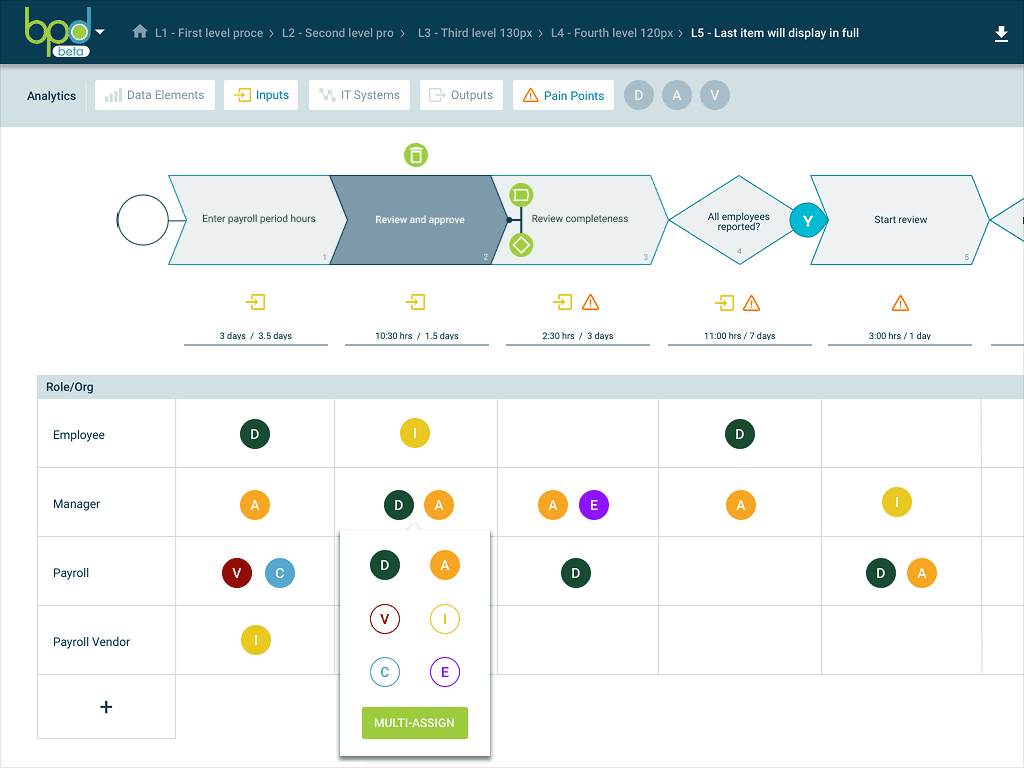
Responsibility Mapping
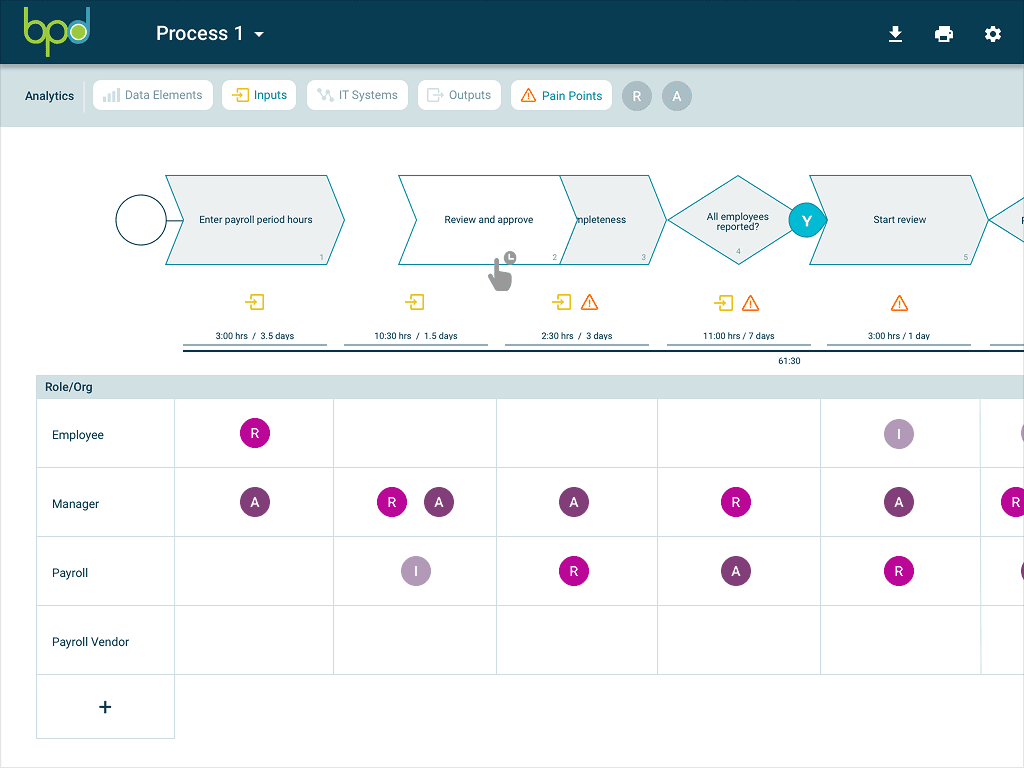
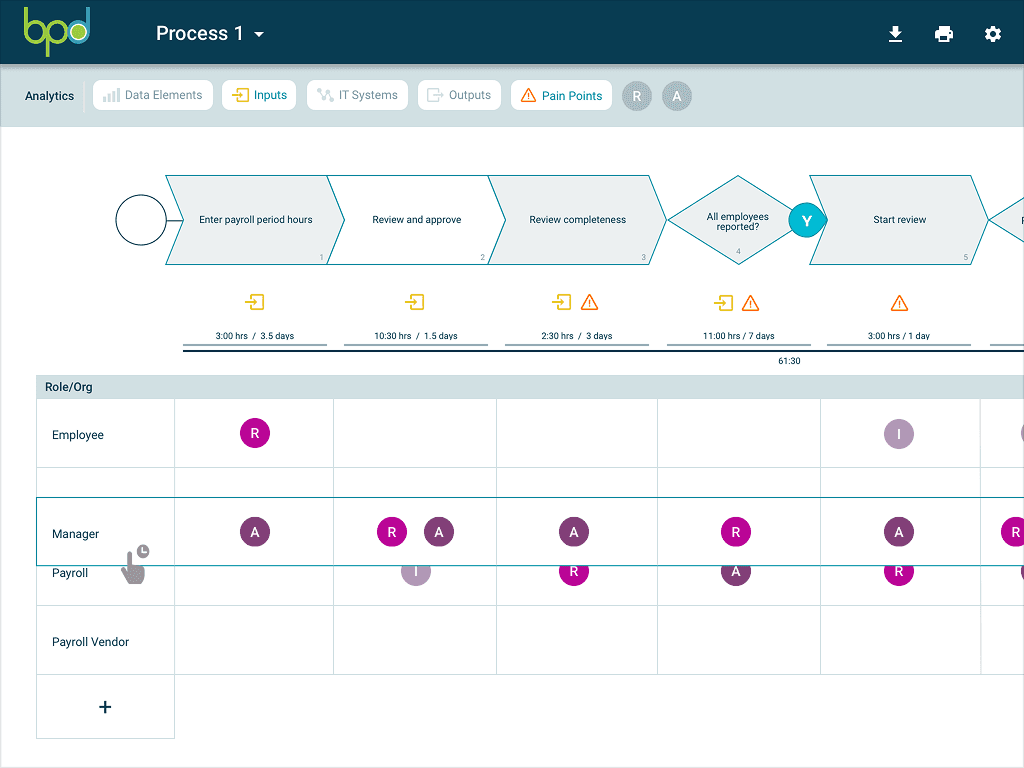
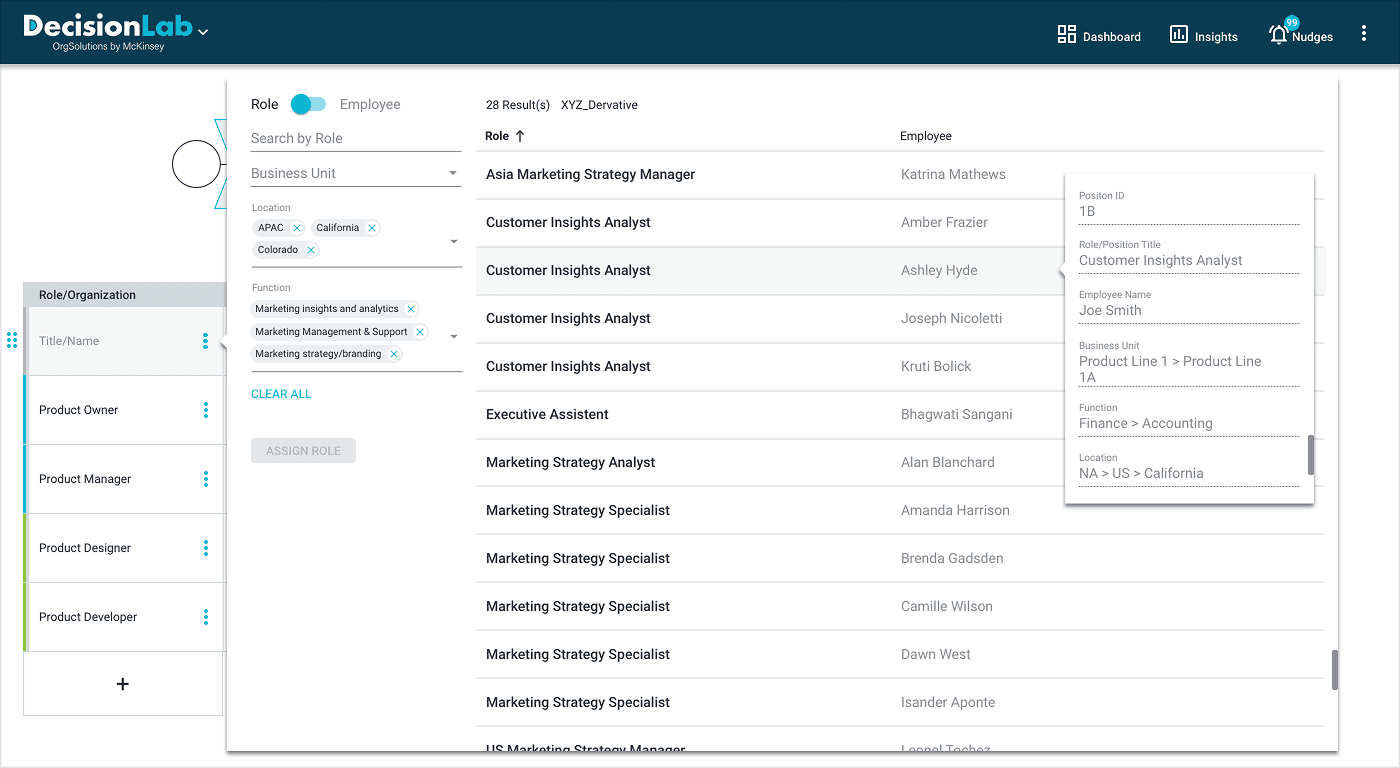
We began with a dynamic canvas that linked process steps directly to roles. This created a clear chain of accountability — transforming abstract workflows into actionable ownership structures.
Simplification for Executives
Early diagrams overwhelmed leadership.
In response, I designed an executive summary mode that abstracted visual complexity into clear, color-coded hierarchies.
This became a key unlock for stakeholder buy-in.
Living Artifact
To replace static slides, we built a system where process maps became living documents — version-controlled, searchable, and accessible organization-wide.
This shifted process mapping from a one-time exercise to a continuous improvement loop.
Pain Point Analysis
I integrated data inputs for step duration, handoffs, and bottleneck detection.
Visual cues highlighted inefficiencies, giving teams instant visibility into where processes broke down.
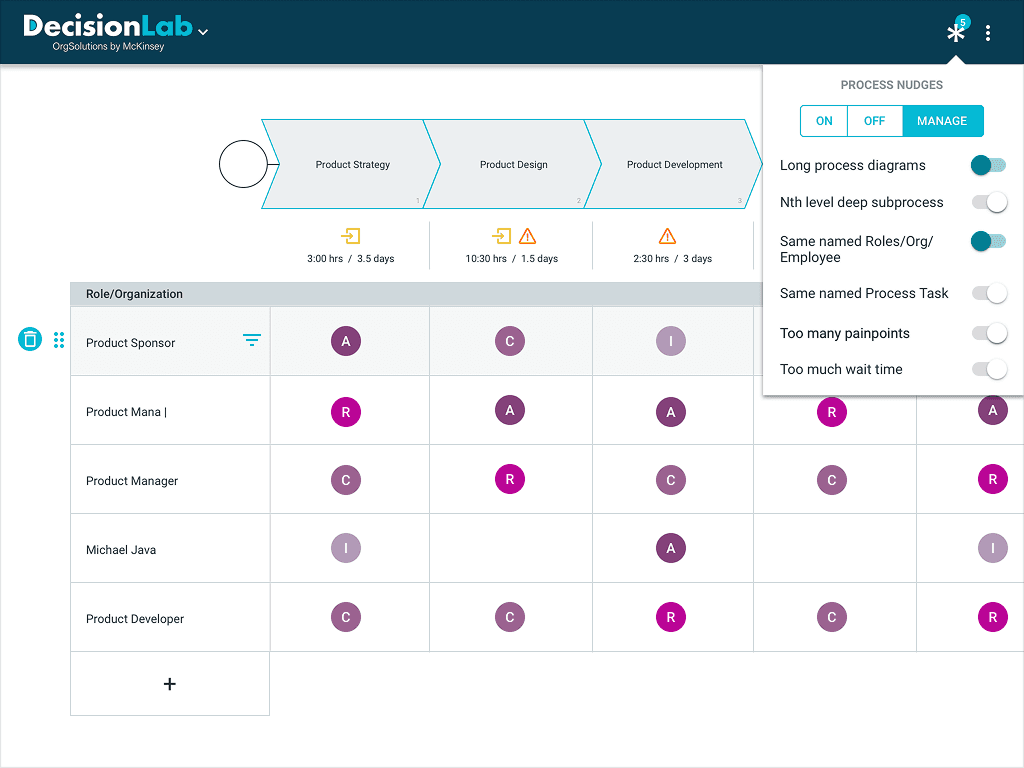
Smart Nudges
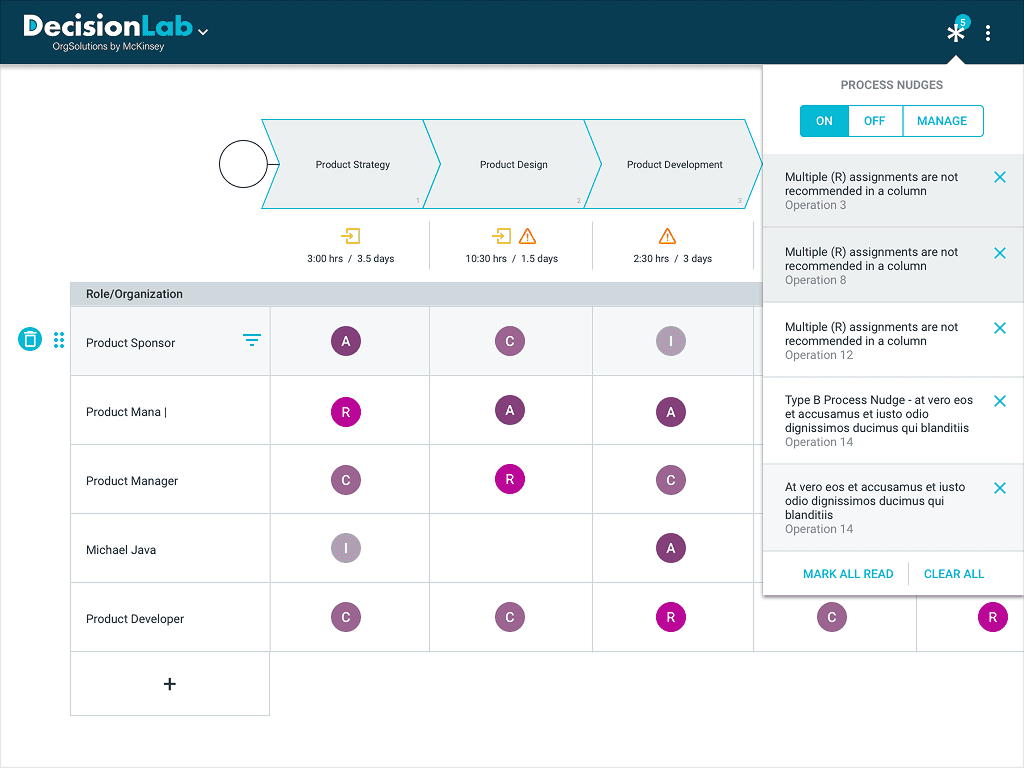
Drawing from benchmarking data, I embedded nudges that flagged structural inefficiencies — such as when multiple roles shared accountability for a single step.
These nudges guided users toward best practices during documentation.
Diagnostic Dashboard
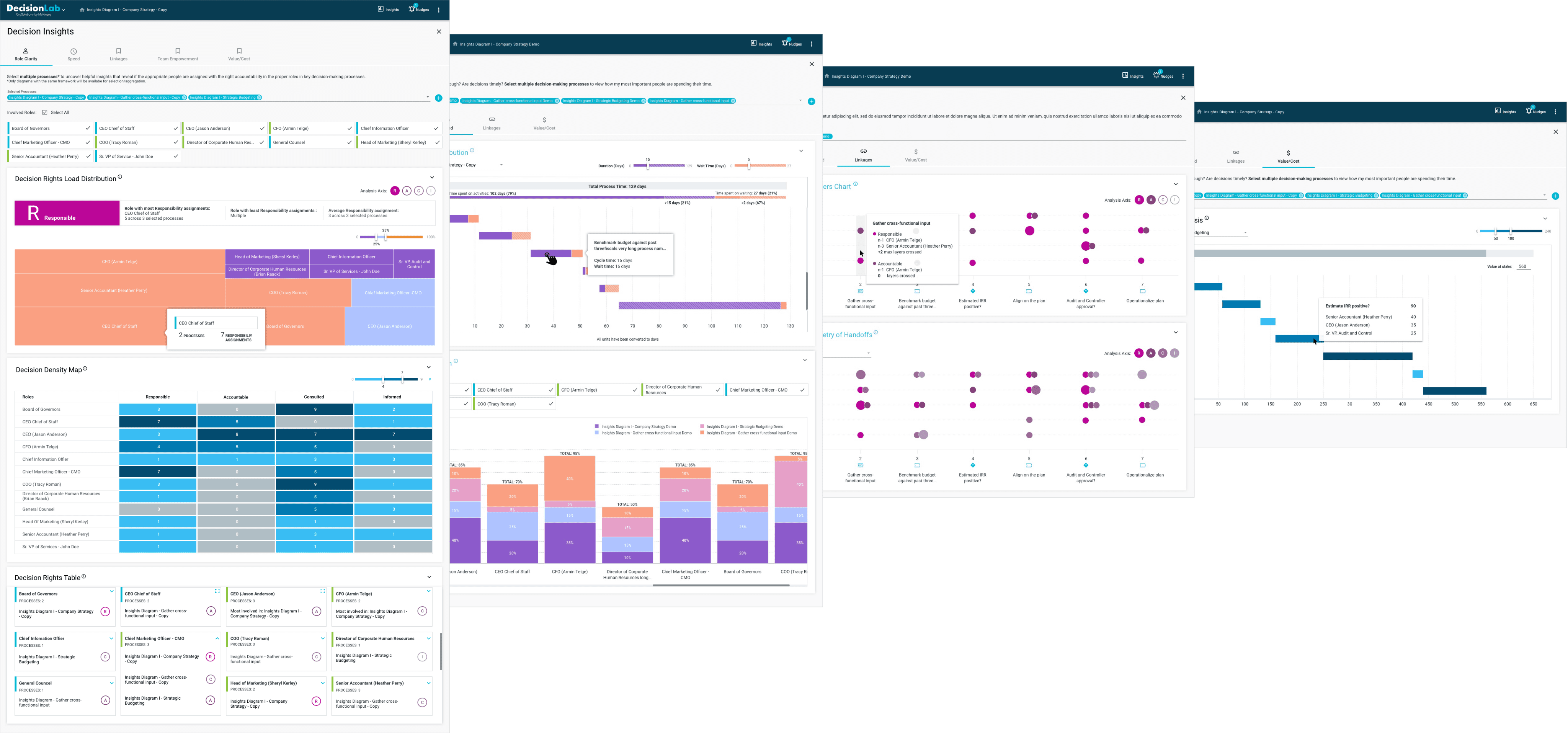
The final layer was a dashboard view that aggregated multiple processes to reveal:
Role overload and underutilization
Duration-based inefficiencies
Cross-functional handoff delays
Executives could now see system-wide patterns, not just individual process issues — a major advancement in operational transparency.
Consultant Customization
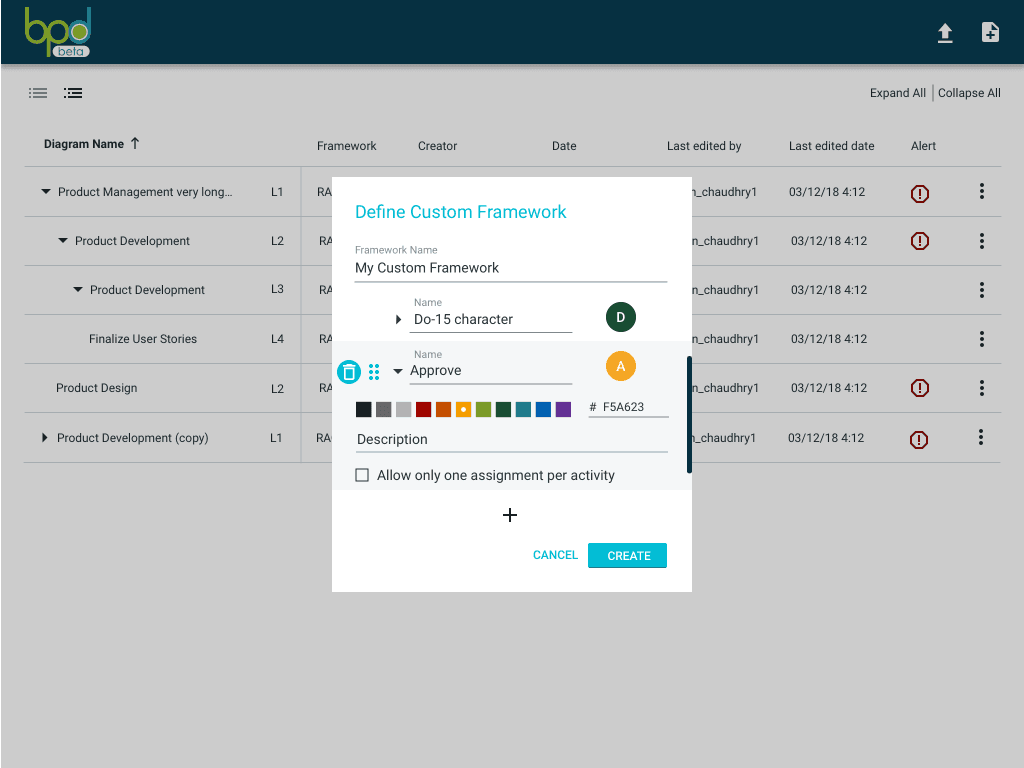
Consultants pushed for flexibility — customizable frameworks, color-coding, and labeling systems. I designed modular configurations that allowed every team to adapt Decision Lab to their methodology, without losing consistency.
Leadership & Influence
As the design lead, I acted as both strategic partner and design operator — helping product leadership shape the roadmap based on field insights.
I facilitated weekly design reviews with stakeholders, balancing consultant needs with technical feasibility.
I influenced prioritization by reframing feature requests through the lens of scalability and data integrity.
I led cross-functional co-creation workshops, ensuring consultants, engineers, and researchers aligned on user value.
When client commitments accelerated the timeline, I worked with engineering to pivot toward integration with OrgLab, ensuring Decision Lab became part of McKinsey’s core product ecosystem.
Results & Impact
Within the pilot phase, Decision Lab demonstrated measurable value:
“This changes how we run meetings. Instead of debating ownership, we can focus on making decisions.”
-Senior Analyst
20+
Client commitments within the first year, validating the product’s appeal and functionality.
5%
Increased sales, solidifying the product's value proposition and establishing it as an asset to the enterprise suite.
More importantly, Decision Lab changed behavior:
Consultants began using process data not just to describe how work was done — but to improve how work should be done.
Reflection
Decision Lab taught me how to design amid ambiguity — balancing C-suite clarity, analyst efficiency, and consultant flexibility within a single experience.
It was also a lesson in leadership through influence: guiding a team through weekly pivots, aligning competing stakeholder needs, and shaping a roadmap that turned an experimental concept into an adopted product.
Ultimately, Decision Lab proved that when design drives clarity, accountability follows — and with it, organizational transformation.